University of Tennessee Athletics

PERRY'S FAMILY HELPS HER ON THE COURSE
March 06, 2002 | Women's Golf
March 6, 2002
by Josh Pate
When Harold Perry's phone rings, he knows it's probably a certain someone wanting some tips on her golf swing. Or, maybe this time it's a question about putting. After all, both Harold and his wife Terry are golf professionals at a country club in Unionville, Pa. They deal with golf questions like that all the time.
Most of the time they get paid for dealing out tips during sessions of teaching golf. But when the phone rings, they don't charge this particular customer for golf lessons. Sometimes the customer just calls to say hello. She's a regular: their daughter, Tai.
"My dad gives me tips and we talk over the phone about my golf game," said Tai, a sophomore on the Lady Vol golf team. "He's a big advantage, to have someone you can just call up all the time and ask what's wrong with my swing."
Perry's parents have given her advice since she stepped on the UT campus less than two years ago. According to Lady Vol head coach Judi Pavon, the advice has been great for Perry. Sometimes parents intervene a little too much when it comes to instructing their children or putting pressure on them to do well. It's not that way with the Perrys.
"They have both competed and have been athletes, so they know that putting pressure on her is not going to help her play any better," Pavon said. "That's nice. I think some parents who haven't competed put more pressure on their kid, which usually doesn't help."
Both Harold and Terry have played professional golf and they know the game inside and out. They know just what to tell Tai when she's doing something wrong. They know how to praise her when she hits it right on the money. That translates into better advice and better performances for Tai.
In fact, Perry's experience playing with her father has given her an edge on the golf course, too.
"Tai has learned a lot of shots because her dad was such a good player," Pavon said. "She's very creative and she will try the more difficult shot if she thinks she can do it, which is really unusual for women's golf. Most women are pretty conservative. I think he's helped her try some different shots and do some things differently than she normally would have."
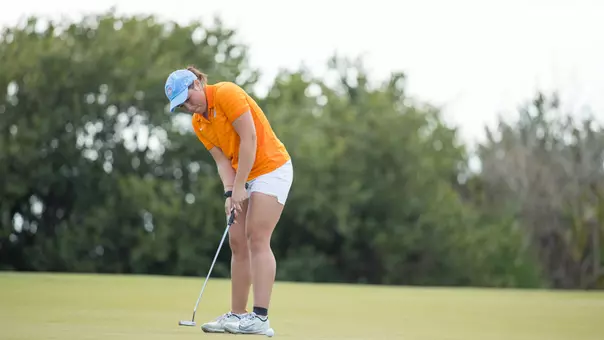
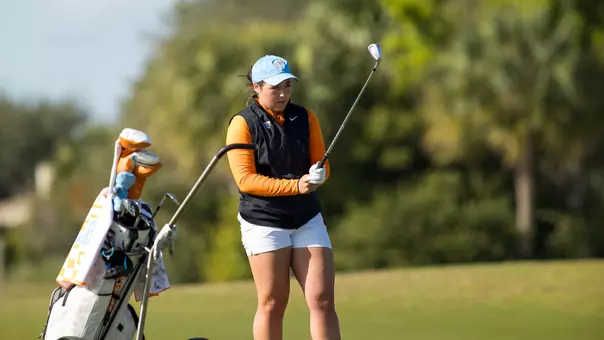
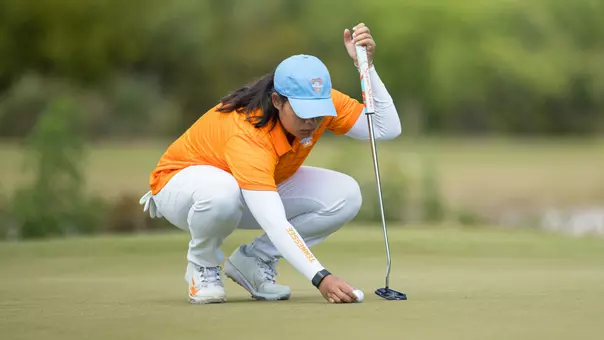
Perry's aggressiveness on the course has allowed her to put up some nice numbers. Her stroke average this season after the Arizona Wildcat Invitational stands at 78.93. One of the better outings of her career was when she tied for 13th at the Capstone Intercollegiate last fall with a three-round score of 240. She also fired a career-low 71 in the final round of the Auburn Derby, where she finished tied for 42nd.
However, her willingness to take the difficult shots has also cost Perry. That's a situation that she and Pavon are working to fix. Since being aggressive on the golf course can often be a make or break gamble, Pavon is trying to get Perry to stay in the gray area of the gamble and stay out of trouble on the golf course.
"I think what Tai really needs to build on is her consistency," Pavon said. "She's getting through about 16 holes, then she will have about two bad holes. It's really costing her. We're going to work on her mental game and her course management to try and get those bad swings out of there and really level off her scores. We need her to shoot between 72 and 77, and really never get over that."
Course management may be the key to Perry's performances. She has a tendency to do things faster than most golfers, including warming up. While the rest of the team is on the putting green or driving range getting ready for a match, Perry is usually hidden away in the parking lot listening to music until she feels she's ready to warm up. She's on a different pace, but it seems to be working.
Even when it's time to play the match, she struggles to keep her pace down. A round of 18 holes in a collegiate match usually lasts about five hours. But Perry says that's no time. By then, she could have almost played the whole tournament.
"I can play 18 holes in two hours," she said. "I have a tendency to play fast so I try to walk really slow on the golf course. I just have to relax. I'm sure it bothers me a little bit, but it doesn't bother me so much that I can't play."
Although Perry likes to blaze around the course and is still working on eliminating that bad hole or two, she's definitely one of the Lady Vols' key performers down the stretch. This season, her stroke average for the final round of tournaments is 75.50, more than four strokes lower than her averages for the first two rounds. That average also ranks third on the team for final-round scores. Young-A Yang and Tina Schneeberger average slightly lower, both at 75.25.
Perry jokes that the lower scores are from playing so poorly early in the tournaments. Obviously that's not the case. The golf team's motto this season is "Find a Way," and that's exactly what Perry is doing when she fires low scores in the final round - finding a way to put the team in contention.
"Actually, she's probably saved us a couple of times," Pavon said, "because we've been putting ourselves in really good positions, but as a team we've not been having good last rounds. So the fact that she's been coming on and having really good last rounds has saved everybody else."
Perry may just be in her second season of collegiate golf, but she has already grown an appreciation for the sport. That type of attitude took some getting used to. She has played numerous junior tournaments throughout her career, but the college setting is something different.
In junior golf, athletes deal with their own actions. They are the only ones who deal with the repercussions of hitting a bad shot or missing a short putt. But in the college game, athletes represent themselves and their team. If one or two golfers have a bad round, the team's score takes the hit.
Perry admits it took her some time to get adjusted to the college game. However, this year, she has a whole new attitude about playing collegiate golf.
"I think this year I've realized how lucky we all are to be playing golf in college," she said. "Especially with the advantages that we'll have taking into the real world with the connections we've made. I'm so grateful that I get to play golf here just because everyone is supportive. Everyone is all about the University of Tennessee. I mean, even if you go to the airport, there's orange everywhere."
"I think about it when I'm on the golf course and I say to myself, 'Wow, I'm really lucky.'"
So are the Lady Vols.