University of Tennessee Athletics
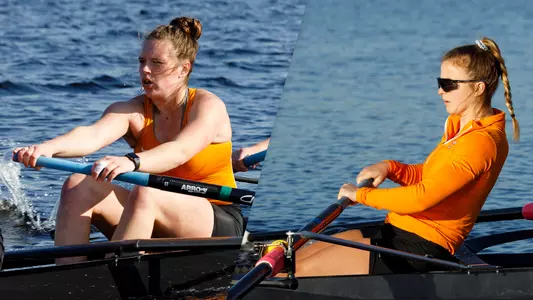
Two UT Rowers Train Virtually With U-23 National Teams
July 31, 2020 | Rowing
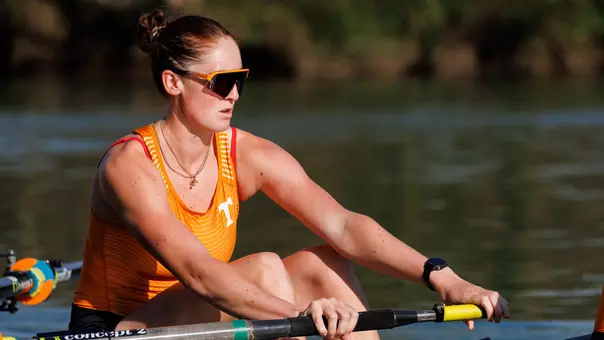
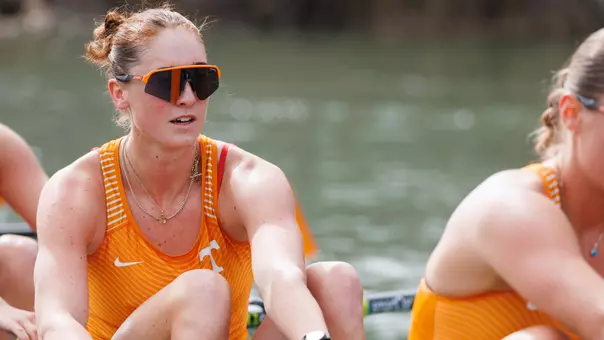
KNOXVILLE, TENN. -- It wasn't the summer they expected. Then again, it wasn't the spring they expected, either. Fresh off of learning their season at Tennessee had been cut short due to the global COVID-19 pandemic, senior Brenna Randall and junior Lindsey Morrissett, both previously selected to attend training camps over the summer to vie for spots on their respective U-23 national teams ahead of the 2020 World Rowing Championships, learned that their training would be virtual as opposed to the planned in-person camps.
Though each had some amount of interaction with coaches and other rowers within their national rowing organizations over the summer, the two were largely on their own, completing assigned erg workouts in the solitude of their garages and improvising with household items when necessary to pull off strength and conditioning assignments.
"It's a lot of (the coaches) just sending out workouts, and then me getting them done on my own," said Randall, who is currently living and training in Winnipeg, Manitoba, Canada. "My coach sends what we're supposed to do every week, and we fill in (on a spreadsheet) what we've done and our splits on the rowing machine. It was a lot of me erging alone in my garage."
While much of the training has been solo, Rowing Canada has done its best to keep everyone engaged via online seminars and even fuel a bit of international competition.
"Canada, England, Australia and New Zealand have collaborated a couple of times. We did the Minute Challenge where everyone across those four countries did a minute on the rowing machines and then recorded their splits and times and everything, and then you'd get ranked in those four countries," said Randall. "And then there was a Row to the Moon Challenge where each country tried to get in as many meters as they could in a week to see how close to the moon we could get, so that was cool."
Luckily for Randall, Covid-19 numbers stayed low in Winnipeg, allowing her to eventually complete some of her workouts on the water.
"We got on the water pretty quick. In Manitoba the numbers are pretty low, so we're allowed to go out in singles. There's a lot of cleaning we have to do and social distancing at the club, but it was nice to actually be able to go back out on the water instead of just on the machine," she said.
Morrissett, currently at home in Atoka, Tenn., is far removed from the water but has been able to engage in some live training sessions via Zoom.
"We have a pretty strict regular schedule that we follow," said Morrissett. "It's Monday through Saturday, six days a week. On Mondays, Wednesdays and Fridays, it's kind of on your own. On Tuesdays, Thursdays and Saturdays, that's when we virtually come together via Zoom, and we do the workout, whatever it may be, together as a team. We'll have all the coaches there, seeing what we can do and getting support from other girls on the team as well.
"The Zoom calls are usually erg workouts. I have a setup in my garage; that's where I've been practicing for the summer. I basically just set my computer up a little away from the erg or wherever I may be, and the way I have it positioned, it will show my body angle so the coaches and coxswains and other rowers can see the motions that I'm doing. But I can hear them, and they give us feedback. We're all able to use that. They can see us, and I can see everybody, so it's not just a one-on-one thing."
On top of her regimented training schedule, Morrissett also managed to notch quite a milestone this summer – erging 100,000 meters in a single day.
"One of the girls, as a fundraiser, posted it in the group message that we have. She was doing (a 100k row) as a part of the NAACP fundraiser for that organization. She just kind of put it out there that she was going to do it and was like, 'Hey, I'm going to do this. If you want to join me, feel free," said Morrissett.
Realizing it was for a good cause and not wanting anyone to have to row alone, Morrissett agreed to join in the effort.
"We created a Zoom link and there ended up being three or four girls that did the 100k, and then some of the other girls from the team were actually on for an hour or so, practicing with us. They didn't do the full 100k, but just being on there and showing their support, that really helped too," she said.
The effort took 11.5 hours, allowing for a 30-45-minute break after every 20,000 meters. Altogether, the group's initiative, combined with a match from Google, resulted in a donation of $13,000 to the National Association for the Advancement of Colored People (NAACP). Morrissett was glad she did it, not only in support of her teammate and the NAACP, but also because she learned a little something about herself in the process.
"It was definitely an all-day challenge. I knew it was going to be a long time, but I'd never done one of those before, and I was kind of shocked that it did take the full day," said Morrissett. "I told my coaches that I actually really enjoyed it. And honestly, if I had to do it again, I would. I've learned a lot about myself because of rowing, and I 100% prefer a distance row any day of the week."
Both athletes admit being disappointed about the transition to a virtual camp and the cancellation of the U-23 World Rowing Championships that were to be held in Bled, Slovenia in August, but they're also quick to point out how they've grown through the experience and how they think it will help them when they rejoin their Tennessee teammates.
"Having to push myself through hard workouts by myself, I think will help (next season)," said Randall. "I'm used to having 30-plus girls all pushing each other and working together, and there's energy and people behind you. If you're really going to push yourself and go to your full effort, it's going to have to come from you. So, I think having no one around and having to push myself in this kind of scenario this summer is helping me mentally… the mental aspect of being able to rely on myself for motivation to actually put in the work and get up early and go out in the cold garage, I think that will help a lot, especially coming back to the team."
Morrissett echoed the sentiment of having to rely on herself for motivation and becoming mentally stronger through the process.
"(Being home in Atoka) I don't have any teammates that can do these workouts with me... I think mentally preparing myself and knowing I can do all this by myself has really made me stronger. Knowing that I'll have even more support from my coaches and teammates once I return back to campus will help me become even faster," said Morrissett. "I'm excited to bring all this energy and speed back to Tennessee and see how we can further it."
It was not the summer they expected, but in the end, they're returning to Rocky Top stronger, mentally tougher, and maybe now more than ever, hungry to compete with their team.