University of Tennessee Athletics
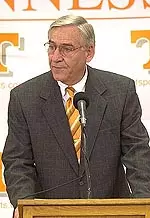
Former Vols Gather To Honor Doug Dickey
November 09, 2001 | Football
Nov. 9, 2001
By Haywood Harris
In 1964 Doug Dickey took over a football program in decline and one year later had made significant strides in rebuilding Tennessee to its customary level as a national powerhouse.
He coached the 1965 Vols to a berth opposite Tulsa in the Bluebonnet Bowl where he guided them to the school's first postseason victory since the 1957 Gator Bowl win over Texas A&M.
Dickey's landmark achievements were the two additions to UT's collection of Southeastern Conference championships, part of the total of 13 league crowns that reside on the Knoxville campus.
During the six years he coached the Vols, Dickey accumulated the trophies of battle normally associated with a highly successful head coach -- a string of All-America and all-conference players, annual bowl visits, coach-of-the-year awards and an Outland Trophy winner included in his legacy.
The elements of the Dickey coaching resume add up to a trove of UT football treasure. But that's not why more than 200 of his players and their wives turned out at The Foundry Nov. 9 to honor him.
One of the most interesting phenomena of sports is the continuing relationship between a coach and his players, from the time they team up for athletic competition until -- some years later -- they gather, like last night, to rehash old times.
I noticed it especially at the reunion of the 1951 national championship football team the night before this year's Syracuse game. Even though General Robert R. Neyland had died in 1962, his name was on the mind of every returning Vol.
Stories were exchanged, almost all of them having Neyland or one of his assistant coaches as the focal point. It undoubtedly was the same when Dickey was feted by prize story-tellers such as Johnny Mills, Bob Johnson and Lester McClain.
University of Tennessee sports psychologist Craig Wrisberg says the sentimental casting of the coach by his ex-players is understandable. "Look at the perception of the ideal coach, and it can be likened to the perception of the ideal father," Wrisberg said.
"Whether it's coach or father, he is expected to set expectations and goals, provide guidance and encouragement,instill discipline and inspire loyalty."
The relationship grows stronger with the passing years, Wrisberg says. "At the time of competition, the discipline part might strike the athletes as overdone. But when the smoke clears, they know the coach has made them better men.
"They forget the hassles, but they remember the leadership qualities that had an impact on their lives."
Coaches who forge a championship record -- Neyland, Dickey, Bowden Wyatt, Johnny Majors and Phillip Fulmer qualify in that respect at Tennessee -- operate in distinctive styles differentiated by their mentalities and personalities.
A couple of Vols who came to last night's reunion were asked to define Dickey's special talents.
Said wide receiver Mike Price: "Coach Dickey was the transcendent strategist who always stressed field position. He had an incredible ability to distribute authority and allow his assistants to coach. He had an exceptional intellect."
Quarterback Dewey Warren added: "He was a perfectionist who ran the show like a military operation. He was focused and always well-prepared. He and Jimmy Dunn hammered the point home that the quarterback had to take on special responsibilities with the offense."
To which I would add my own observation: In researching a a book on UT national championship teams, I found another quality of Dickey's that was the key to Tennessee's turnaround after a loss to UCLA in the 1967 season opener. Dickey had an uncanny knack for sensing where a switch in a player's position would benefit the team. More important, he wasn't afraid to make the adjustments he considered necessary. His willingness to implement drastic changes in the defense set the stage for that year's championship run.
Haywood Harris, retired UT associate AD for media relations, is a special assistant to Doug Dickey and writes a column for the Maryville Daily Times.