

Black in Softball: Adrienne "Buffy" Walker
This Black History Month a pair of trailblazing LVFLs share their personal journeys through softball and the impact that race has played.
Although much has changed, many things still remain the same. It wasn't until I was an adult did I learn of the stories about my father, who was an electrician by trade, having to fight for a seat at the lunch table at his workplace or my mother, who worked as an LPN in a private practice, being color shamed for simply being a woman of color trying to do her job of caring for others.
As a young child growing up in Carlsbad, New Mexico, I never knew of the racial injustices that my parents faced on a daily basis while trying to earn an honest living for our family. All I knew is that I grew up in a small community that was quite diverse and through my eyes as a child, the world I knew seemed pretty perfect. For the most part, my parents did a really good job of controlling the narrative when it came to the racial inequalities that they were still facing as adults, not to mention what they had experienced as kids.
In general, I believed we lived in a community where the majority believed in doing the right thing and treating people the way you wanted to be treated.
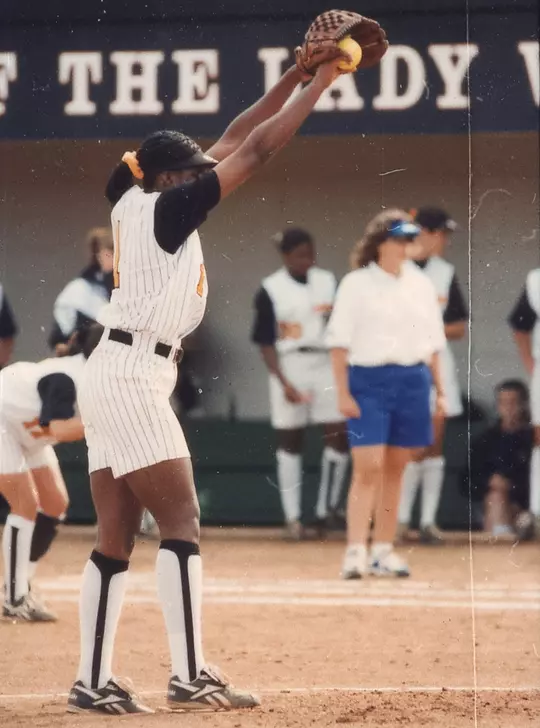
As I became of age and started to play organized sports, I fell in love with the game of softball and the friends it surrounded me with. Many of those friends I would continue to play with throughout grade school on multiple sports teams, but still for me, there was nothing that compared to playing softball.
Being a pitcher wasn't always glamorous. My father and I spent many hours in the backyard trying to perfect my craft. Little did we know about the journey that lied ahead of us. The long practice hours spent at the ballpark, the extra laps I had to run for not being focused during practice and the long car rides home with my father are memories I will always treasure.
From about the ages of 11-14, I began to really excel in the circle and our local travel softball team, coached by my father, began to travel to all parts of the country to compete against some of the best organizations. We competed on some of the biggest stages for amateur softball in places like Oklahoma City, Indianapolis, Sacramento and Dallas, Texas in hopes of winning a National ASA Championship.
Softball allowed me to see places, that I would have never been able to see otherwise at such a young age. Softball opened my eyes to just how big the world really is.
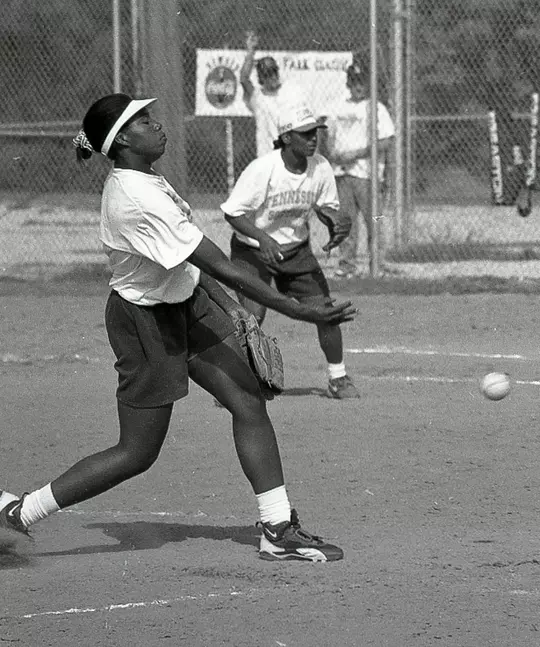
Softball allowed me to see places, that I would have never been able to see otherwise at such a young age. Softball opened my eyes to just how big the world really is. It allowed me to dream and chase dreams with so many of my childhood friends. Like the young kids say today, “Softball is life”, and that's exactly what it was for me.
It wasn't until the time came for me to enter high school that the game I loved and the game that brought me so much joy, begin to look and feel a little different. For the first time someone had openly taken issue with how I looked. The issue was with the color of my skin and what I lacked in physical traits. I was told if only I had blonde hair and blue eyes, then it would acceptable for me to be in the circle for such an accomplished high school program. This is when it became clear to me that although much had changed in the world, many things still remain the same.
Racism and discriminatory acts weren't just a thing of the past and compiled into a chapter or two of my high school history books. These things were very much so alive and living amongst me. In general, the teenage years can be hard and awkward enough without throwing prejudices into the mix.
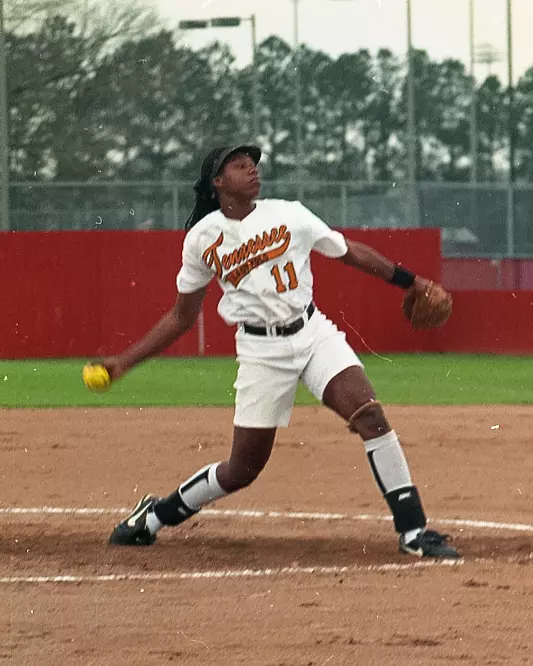
To tell a child what she cannot do because of the color of her skin is downright audacious. To isolate a child from her childhood friends and refrain them from being her teammates because of one's own personal insecurities is brash. And to publicly attack a child's character for standing up for herself and what she believed in, is cold-hearted. Sadly, I was that child.
Upon entering high school, I was told that I'd never pitch for our powerhouse high school softball program because of the color of my skin. I was told that I wasn't a pitcher and I'd be better at playing another position on the field. My childhood friends that had played with me for years, were told that if they chose to play with me in summer travel ball that they would be jeopardizing their playing time with the high school program.
I was labeled as having no character in our local newspaper because I chose to stand up for myself and what I believed in. These were the life lessons I faced as a young Black aspiring softball pitcher. But as the saying goes, "When life throws you lemons, you make lemonade," and that's exactly what I did.
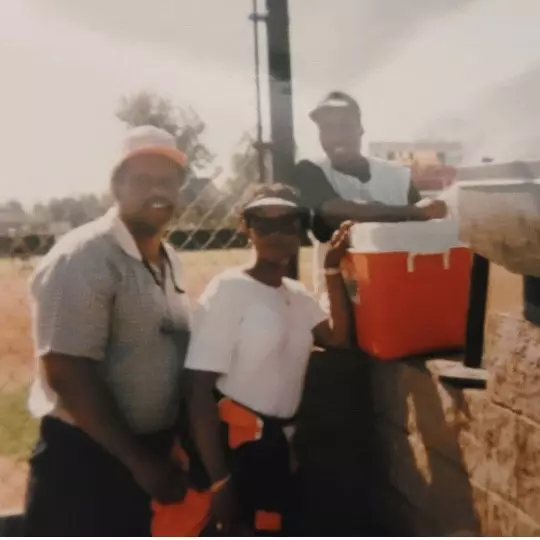
From as far back as I can remember, my parents always taught me that all things were possible if you believe. One of my father's favorite scriptures was 2 Corinthians 5:7 - "For we walk by faith and not by sight." I can recall numerous conversations where he often reminded me of those simple words and how it would help me get through whatever obstacle I was facing.
After many family conversations, it was the summer before starting high school that I decided I would step out on faith and fight for my dream of one day becoming a college softball pitcher. I started the high school year fully committed to playing high school basketball with my friends for the next several years, but I elected to not play softball for the high school program. My talents in the circle would be fully concentrated on playing travel softball.
Because I was isolated from many of my teammates that I had grown to love the game with, my parents and I were forced to take my skillset out of state in order for me to pursue my dream of earning a college softball scholarship. Glendale, Arizona is where I landed and spent my summers playing for the Arizona Patriots. Leaving my family and friends behind for the summers wasn't an easy task, but boy was it worth it. What a blessing it turned out to be.
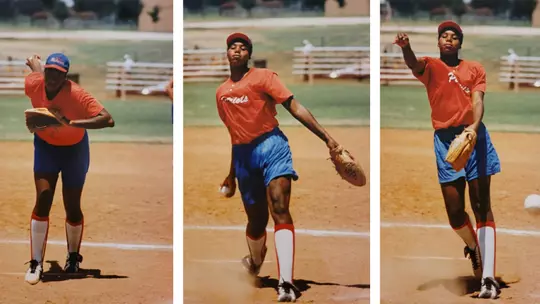
The sweetest and most generous family, the Kemmer Family, opened their home and hearts to me as if I were one of their very own. Phill Kemmer, the head coach for the Patriots, was truly God sent. He became a second dad to me. He believed in me and took care of me. He put me in the best position to reach my college softball dreams. It was Phill Kemmer who led the way and guided me to Tennessee. It must be said that Coach Kemmer didn't do this just for me. He was committed to an entire team of girls aspiring to play college softball and he helped each and every one of us accomplish that dream. For that, I am forever grateful.
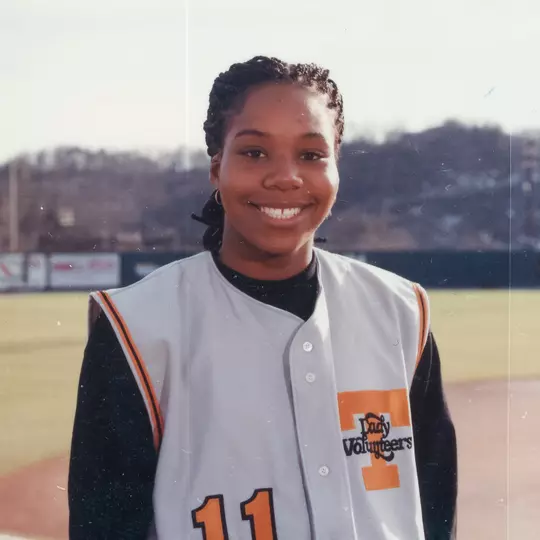
My decision to not play for my local high school softball program was a decision driven primarily by my love for being on the mound and the faith that my father and family had instilled in me. Little did I know, but that act of faith opened doors far beyond what I had dreamed. Having the opportunity to be a part of the first-ever Lady Vol softball team was truly an honor, but it wasn't until after I graduated from Tennessee that I realized the depths of my journey and accomplishments.
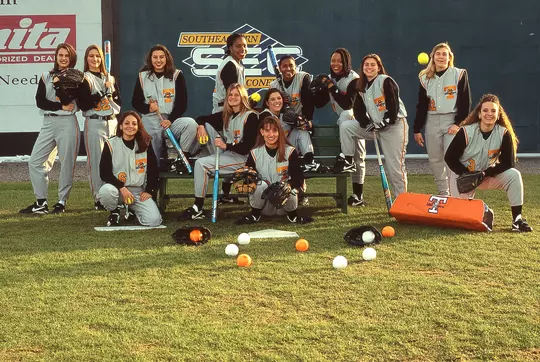
Upon entering high school, I was told that I'd never pitch for our powerhouse high school softball program because of the color of my skin.
When I reflect on my journey to Tennessee and my time spent there, there's so much to be grateful for and so much to be proud of. The challenges I faced growing up had well prepared me for anything thrown my way once I reached Rocky Top. Every new program has its own set of challenges but I can honestly say that Tennessee was everything I had hoped it would be. I was proud to be one of the first. I was proud to build traditions and make my mark in the Lady Vol history books. I was proud to play for a school that upheld the women's athletic department to the highest regards.
We didn't lack for anything and we weren't treated secondary to the men's athletic department. However, there's one thing that I often reflect on that brings my softball journey full circle. I remember vividly when I was about 15 years old and my youth pastor shared with me that one day I would be a role model and looked up to by many young girls. At the time, I just knew my youth pastor had the wrong message for the wrong girl. Growing up, I can only recall twice ever seeing someone that looked like me in the circle – and that was well into my teenage years. I recall being in awe of their Black Girl Magic from the circle. It was truly an image that strengthened my faith.
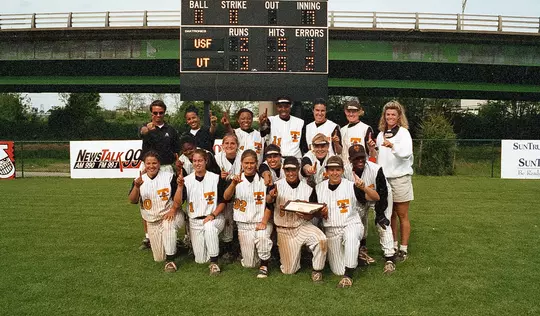
In all that the University of Tennessee has done for me and continues to do for me, my greatest honor is being chosen to be one of the first-ever players and being one of the first Black pitchers for the program just makes it that much sweeter.
Now, as an adult and someone who earns a living as a private softball pitcher instructor, I know without a doubt my youth pastor's words were meant for my ears. I am convinced now more than ever before that I was called to be an inspiration. Just as the two young Black pitchers unknowingly inspired me as a child, my hope is that sharing my story serves as inspiration and strengthens the faith of generations to come.
Tennessee Hall of Fame Pitcher #11
Adrienne "Buffy" Walker-Chery